Last Updated: May 14, 2026
By: Amy Schlueter
If you’ve ever sat across from a student who wants to read—but just…can’t—you know how heavy that feels.
They guess. They shut down. They avoid.
And you’re sitting there thinking, I’m a great teacher and this is a smart kid…so what’s the missing piece?
Here’s the truth: nothing is broken. The student just hasn’t been taught in a way that works for his or her brain.
Whether you’re new to dyslexia instruction, dipping your toes into structured literacy, or trying to support students during your already packed day in the classroom—these strategies will help you move students from stuck to strong.
Before We Dive In: One Size Doesn’t Fit Anyone
Here’s something that took me a while to fully embrace: there is no single program, routine, or strategy that will meet the needs of every struggling reader you sit across from. And that’s not a flaw in the program—or in the student.
It’s just reality. In one group, you might have:
A student with significant phonological gaps
Another with decent decoding but weak fluency
And another who can read the words but has no idea what they mean
That’s why having a toolbox of literacy interventions matters so much. Not random ideas or filler activities. Not another Pinterest inspo board. Intentional, research-aligned strategies you can pull from and adjust in real time.
Because implementing a structured intervention isn’t about dying on that hill—it’s about knowing when to shift to the right one. It’s knowing which one to use, when to use it, and how to adjust it for the student in front of you.
Shift #1: Stop Guessing What They Need (Test Them Instead)
Some kids learn to read like it’s a magical side effect of being a human. These are not those kids.
Struggling readers need explicit, systematic instruction. But here’s the part that often gets overlooked: Before you can teach effectively, you have to know exactly what the student needs. That’s why quality assessment matters so much. And you have to get more than just a MAP score and an ORF to figure out what’s holding your students back.
One struggling reader may have weak phonemic awareness. Another may decode accurately but read slower than molasses in January. Another may have great fluency, but have no idea what they actually read. And here’s where your mad skills are critical. If we treat all struggling readers the same, we miss the opportunity to target the actual problem.
At the beginning of the school year, I use a variety of assessments to build a complete picture of each student’s reading profile.
I use EasyCBM to benchmark grade-level vocabulary, fluency, basic reading, and proficient reading skills. It gives me valuable data about how students compare to grade-level expectations and helps identify immediate areas of concern.
The (FREE) San Diego Quick Assessment is great because it provides a fast, informal snapshot of reading performance and instructional reading level. This little test is uncanny in its ability to predict the grade level at which a student can independently read.
Another tool I value highly is the Reading Simplified informal assessment. I love its focus on nonsense word reading, phoneme segmentation, and advanced phonics decoding. Nonsense words are very revealing because they show whether a student can truly apply phonics skills rather than relying on memorization or context clues. The phoneme segmenting task pinpoints weaknesses in phonemic awareness, which is often the hidden root of reading difficulty. This (FREE) quick little assessment can be administered in 10-15 minutes.
If I know I’m going to use a structured literacy intervention, I administer assessments such as the WIST (Word Identification and Spelling Test) or WADE (Wilson Assessment of Decoding and Encoding). These tools dig much deeper (and take a bit longer to administer) into the foundational components of reading. Despite taking days to get everyone tested, the extra push gives you very detailed data that will inform your instruction all year.
Because these assessments examine multiple components of reading, they can reveal both gaps and strengths. They allow me to identify a student’s Greatest Area of Need (GAN) while also recognizing the skills that can be leveraged during instruction.
And honestly? This matters more than people realize. Too many struggling readers spend years receiving an intervention that isn’t suited to their needs. BUT assessment-driven instruction and progress monitoring changes that. Instead of guessing or assuming, you can teach with precision.
That’s when growth starts happening faster. Not because the student suddenly “tries harder,” but because the instruction finally matches the need.
Shift #2: Phonics First—Because Decoding Drives Everything
If students can’t decode, everything else starts wobbling.
The top priorities:
- Sound-symbol relationships (phonemic awareness)
- Blending and segmenting
- Syllable types
- Orthographic mapping
- Automaticity
And we don’t rush it. Because nothing says “future frustration” like skipping foundational skills and hoping for the best. But here’s the big caveat- Don’t assume there’s a single “best” reading intervention for every struggling reader. There isn’t. That’s why reading specialists need a toolbox—not a one-size-fits-all program.
A student with severe phonemic awareness deficits may need a very different approach than a student whose primary struggle is fluency. What works beautifully for one child may completely flop for another.
That’s why I strongly believe reading specialists should have multiple evidence-based interventions and strategies they can pull from depending on the student’s needs.
Personally, I recommend having:
2–5 structured literacy interventions in your toolbox so you can match instruction to the learner rather than forcing every learner into the same program
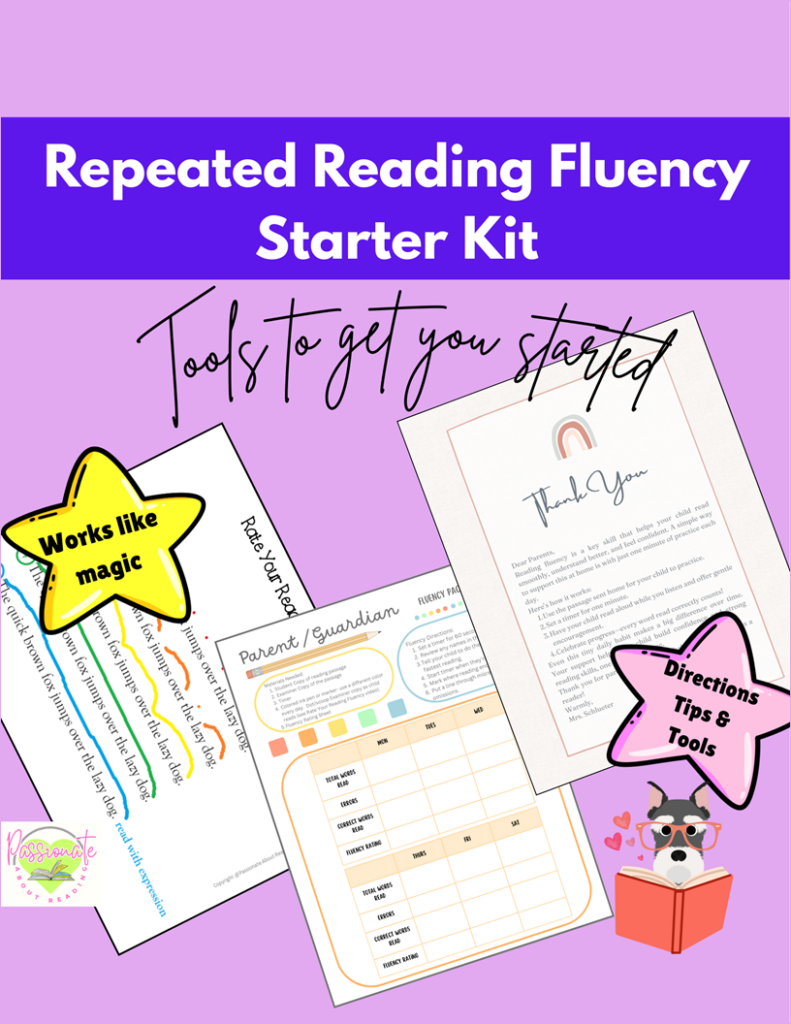
A concrete fluency plan that includes repeated reading, prosody development, modeling, progress monitoring, and many opportunities for successful practice. I prioritize the importance of practicing at home and I’ve successfully helped lots of struggling students double or triple their fluency. My Fluency Starter Kit takes the guesswork out of how to easily incorporate meaningful fluency practice into your setting.
At least 3 comprehension tools or frameworks that help students actively engage independently with text, to strengthen fluency, vocabulary, and comprehension.
Why so many? Because reading is a complex 8 stranded rope that needs all components working together. When one piece weakens, the whole system frays. The more tools you have, the more flexibility and responsiveness you possess as an educator.
And honestly, flexibility matters. Having a variety of interventions allows you to pivot instead of panic. It also prevents the dangerous mindset that if a student isn’t succeeding, the student is the problem. Sometimes the student simply hasn’t been matched with the right approach yet.
Shift #3: Teach Patterns, Not Random Words
Instead of tossing sight words at students like confetti, organize them:
- could, would, should → teach “ould” as a chunk
- were, where → compare and contrast
- many, any → map it and highlight the irregular vowel
Now students aren’t memorizing—they’re making connections. And their brains love that. Because here’s the reality: many struggling readers have terrible “word memory” when words are taught in isolation. If we hand them a random stack of flashcards and say, “Good luck, buddy,” most of those words are going straight into the void. Especially for kids riding the super struggle bus.
These students need patterns. Repetition. Explicit explanation. Multisensory approach. Sentences to see how it’s used. And they need to see that English—even its weird parts—still has structure. When we group words by spelling patterns, sound patterns, or irregular features, students begin noticing connections instead of viewing every sight word as an emergency situation. That shift is huge.
Instead of relying purely on rote memorization, students begin building a mental network of patterns they can actually retrieve later. That’s what leads to transfer and long-term retention. And honestly? This works especially well in short, daily mini lessons. Not 2 minutes of soul-crushing flashcard drills that don’t work. Or “read the list three more times and maybe cry a little.” I’m talking focused, explicit instruction that takes only a few minutes a day- like mapping sounds, marking irregular parts or comparing similar parts, writing it, reading it in context and revisiting consistently. That consistency matters far more than marathon memorization sessions.
For my students who struggle significantly with sight words, these daily mini lessons have been incredibly effective because they combine so many elements into a manageable format. That’s actually why I created my Sight Word Mini Lesson—I needed a breakthrough with three 5th-grade boys so I started teaching sight words in a way that makes sense for super struggling readers. Anytime I slack with the mini-lesson and throw flashcards at them I get heads down on the table.😥 So stick with what works- even when you feel short on time.
Shift #4: Multisensory Isn’t Extra—It’s Necessary
Tapping, tracing, building, skywriting…yes, all of it.
Is it a little more effort? Sure. Does it work? Also yes.
For struggling readers—especially students with dyslexia—language often needs to become physical before it becomes automatic. These students typically don’t learn through listening alone or by staring at a worksheet for twenty minutes while mentally planning their Minecraft strategy for later. Multisensory instruction gives the brain more than one pathway to hold onto information.
When students:
- see a pattern
- say it out loud
- tap sounds
- blend as they read- using a card to cover and reveal letters
- build the word out of letter tiles
- physically manipulate letters or syllables on letter tiles or syllable cards
- sort words- great as a competition or partner work
- rainbow write words with different colored ink
- find it- highlight targeted sounds/skills in authentic connected text.
…the learning becomes much more durable.
Instead of information floating around briefly before disappearing into the abyss, students begin creating stronger neural connections that support long-term retention and automaticity. And no, multisensory instruction is not “babyish.” If a fifth grader is struggling to read multisyllabic words, they don’t need fewer supports because they are older. They need instruction that actually matches how their brain learns best.
The other benefit? Engagement! Movement naturally increases attention, participation, and alertness. Students who usually shut down during reading instruction often become far more willing to participate when lessons are interactive and hands-on.
And contrary to popular belief, multisensory instruction does not require you to become a full-time craft influencer on social media. Sometimes the most effective activities are incredibly simple- like getting out of their seats to do a word scavenger hunt or a trip to the whiteboard to switch a sound. These strategies are powerful because they make abstract language concepts visible and concrete.
For many struggling readers, that shift changes everything.
Shift #5: Retrieval Practice (AKA the Slightly Uncomfortable Magic)
Rereading a word feels productive.
Students look at the word. They nod confidently. You nod confidently. Everybody feels wildly successful for approximately seven seconds. Then the word disappears and suddenly:
“Wait…what was it again?”
And honestly? That moment is where the real learning begins. Because recognition is not the same as recall.
A student can stare at a sight word list twenty times and still struggle to retrieve those same words independently in connected text or writing. The brain loves familiarity, but familiarity alone does not create durable learning. Retrieval practice does.
Show it.
Hide it.
Have them say it.
Write it from memory.
Build it without looking.
That tiny moment of: “Uhhhh…wait a minute” …is actually gold. That’s the brain working to strengthen the neural pathway instead of simply admiring the pathway from a distance. And yes, this method can feel uncomfortable for students at first—especially for struggling readers who are used to depending on visual supports or repeated exposure. But that productive struggle is incredibly important. Not overwhelming frustration. Not panic. Just enough effort that the brain has to actively pull the information back up. That’s what helps learning stick.
This is especially powerful for students who are genuinely struggling because many of them need more repetition and active recall opportunities than their peers. Simply reviewing words over and over is usually not enough.
Students need frequent opportunities to actively retrieve skills through quick drills, dictated spelling, oral recall, and “cover and write” activities. They also benefit from cumulative review and practicing skills again days later to strengthen long-term retention. And the best part? Retrieval practice doesn’t require complicated prep work. Some of the most effective moments happen during quick daily routines:
“Write the word I just erased.”
“Tap and spell it without looking.”
“What chunk do you remember from yesterday?”
“Can you write all three words from memory?”
These tiny moments of recall build stronger memory pathways over time. Because the goal isn’t for students to recognize words only when they’re staring directly at them on a flashcard under ideal laboratory conditions. The goal is automatic retrieval in real reading and writing.
That’s when we know the learning actually stuck.
And That’s A Wrap
Today we explored five powerful structured literacy strategies that help struggling readers build stronger reading foundations. From assessment-driven instruction and explicit phonics teaching to multisensory learning, word pattern instruction, and retrieval practice, these strategies focus on helping students develop lasting reading skills—not just temporary memorization.
Stay tuned for Shifts #6–10, where we’ll dive into five more structured literacy strategies that can take your students to the next level by strengthening motivation, fluency, comprehension myths, predictability and the reading intervention traps that quietly sabotage growth without teachers even realizing it.