Let’s just say it out loud: being a reading specialist is so much more than pulling a group, following a script, and collecting progress monitoring data.
Yes, we implement evidence-based interventions.
Yes, we graph the data.
Yes, we analyze trends and celebrate growth like it’s the Super Bowl of literacy.
But the real magic? It’s in the constant reflection happening behind the scenes.
It’s in the micro-moments.
It’s when a student reads “from” as “for” for the fifth time and you pause and think:
Is that visual similarity? Weak orthographic mapping? Inattention?
Or is it simply a habit that’s gone unchecked and now thinks it owns the place?
It’s when a child reads slowly. Painfully slowly. Like… we-aged-during-that-sentence slowly.
Is decoding inaccurate?
Or is it accurate but not automatic?
Is it processing speed?
Is it anxiety?
Is it perfectionism?
Is Mercury in retrograde? (Kidding. Mostly.)
A program won’t answer those questions.
A thinking, reflective reading specialist will.
We Study Patterns, Not Just Scores
Data tells you what is happening.
Error analysis tells you why.
Anyone can circle a percentile rank. Not everyone can dissect a miscued vowel and trace it back to its source.
Are they consistently skipping small function words?
Are they substituting based on meaning instead of print?
Are they guessing from the first letter and confidently strutting forward like, “Yep, nailed it”?
Those patterns matter.
When repeated errors show up, I bring them to the student’s attention. Kindly. Directly. No shame — just awareness.
“I’m noticing you’re skipping endings.”
“I’m noticing you’re not checking the vowel.”
It’s not dramatic. It’s detective work.
Accountability builds attention. Attention builds growth.
The Whole Child Matters
Sometimes the struggle isn’t phonics or comprehension at all.
I’ve had students whose lives changed because someone noticed:
- Head tilting while reading
- Excessive blinking
- Losing their place constantly
- Complaints of headaches
Three of my students ended up with corrective lenses or visual tracking therapy after I made a phone call home. Three. That’s not coincidence — that’s observation.
Sometimes the most powerful intervention is dialing a parent and saying, “I’m noticing something.”
We are often the first to see what classroom teachers simply don’t have time to notice.
And sometimes the right move isn’t more intervention — it’s a different one.
Too slow? They disengage.
Too fast? They shut down.
Wrong level? Confidence crumbles faster than my auntie’s day-old scones.
Notice it. Switch it. Adjust it. Personalize it.
That’s not failure — that’s expertise.
When Comprehension Is Quietly Disintegrating
Word callers exist. We’ve all met them. Beautiful decoding. Zero meaning. Reading like a robot auditioning for a voiceover job.
If they can’t remember what they read, stop them every paragraph and have them jot the most important idea on a Post-it. One word, phrase or sentence. No overthinking. No essay. Just the gist.
Soon they’re reading a whole page and jotting down the most important details. That leads to paying attention to the whole text. Asking questions. Noticing where they got off track. Rereading. Asking for clarity.
That’s ownership.
If they struggle with multiple choice, explicitly teach the process of elimination. Cross off the obvious distractors. Narrow the field. Make test-taking strategic instead of emotional. Give them a Post-it to physically cover answer choices while eliminating them. Sometimes decluttering the visual field is half the battle.
If they struggle to make connections, teach visualization. Make the mental movie explicit.
“What do you see, hear, taste, feel, or smell?”
“When have you experienced something like this?”
“Can you see yourself in the scene — or are you just skimming past it?”
These are not add-ons. These are lifelines.
Fluency Isn’t Just Speed — It’s Cognitive Space
If decoding is accurate but painfully slow, repeated reading of fluency passages works like magic. I dive into the research in my post The Science Behind Why Repeated Reading Works, and the evidence is powerful.
It’s not memorization.
It’s strengthening neural pathways.
It’s building automaticity so the brain can shift from decoding to thinking.
When words become automatic, comprehension has room to breathe.
And when comprehension can breathe? Confidence follows.
Engagement Is Not Extra
If a student is bored, that’s data too.
And let’s face it — school just isn’t as carefree as it used to be. Kids are juggling complex text, heavy expectations, and a whole lot of pressure.
So yes, we can bring back some joy because you can gamify anything. Fresh out of ideas? Ask AI.
Last week I taught the ow sound and made a “Slap It” game in three minutes using index cards. Words like cow and blow. That’s it. Instant energy shift — from exhausted, brain-drained kiddos to thrilled, competitive learners who suddenly care deeply about vowel teams.
There are also fantastic free platforms with ready-made resources like:
- Wordwall
- Bamboozle
- Blooket
- Kahoot!
Engagement fuels effort.
Effort fuels progress.
Fun is not fluff. It’s strategy.
The Most Powerful Intervention? A Student’s Thoughts.
At the beginning of every year, I teach a lesson that absolutely blows my students’ minds.
We talk about thoughts.
Not in a fluffy, poster-on-the-wall kind of way. In a This-Is-Science-And-You-Can-See-It kind of way.
We watch a pendulum demonstration (gotta love Oprah in full 80’s mode). And they think- “No way.” We talk.
Then I show them the rice experiment video where rice exposed to positive versus negative words changes over time. BTW- One student even tried it at home last fall. It worked.
And just when they think their brains can’t stretch any further, I end with the water crystal experiments by Masaru Emoto. Now they’re thinking- “Hey, maybe there is something to this.”
Then I hand them a pendulum that I made out of washers from the hubby’s tool kit and some yarn and we try it for ourselves. The students hold them still, focus their thoughts, and watch what happens.
The room goes silent.
The pendulums start to move. Mouths drop.
Every year, someone whispers, “Wait… what?! HOWWW???”
Then we talk about why.
Whether they believe every detail or not isn’t the point.
The point is this: words matter. Thoughts matter. Self-talk matters.
Because if a student is telling themselves:
“You’re so dumb.”
“You’ll never get this.”
“I’m just bad at reading.”
Their brain listens.
So we interrupt it.
I use a double speech-bubble and tape it right to their device keyboard. One bubble holds their old limiting belief. The other holds their replacement thought:
“Mistakes help my brain grow.”
“I can try a different strategy.”
“I’m getting a little better each day.”
And when I catch them mid-eye-roll saying, “Ugh, I’m bad at this,” I gently point to the bubble.
They sigh.
They reset.
They try again.
We don’t just teach phonics patterns.
We teach metacognition.
We teach ownership.
We teach them to argue back against their inner critic.
Belief drives effort.
Effort drives practice.
Practice drives neural change.
The Intangible Piece
There’s something else we don’t talk about enough: intuition.
Years of watching students struggle, grow, plateau, and soar builds professional instinct. You start to sense when something feels “off.” You start to predict breakdowns before they happen.
That instinct, paired with research-based practice, is powerful.
We are observers.
We are analysts.
We are adjusters.
We are motivators.
We are advocates.
We don’t just implement programs.
We investigate.
We intervene.
We reflect.
We refine.
And sometimes? We completely alter the trajectory of a child’s academic life.
So no — you’re not “just” a reading specialist.
You’re a super-powered, science-backed, data-loving, game-making, life-changing literacy detective.
Cape optional. Dry erase marker required. ✨
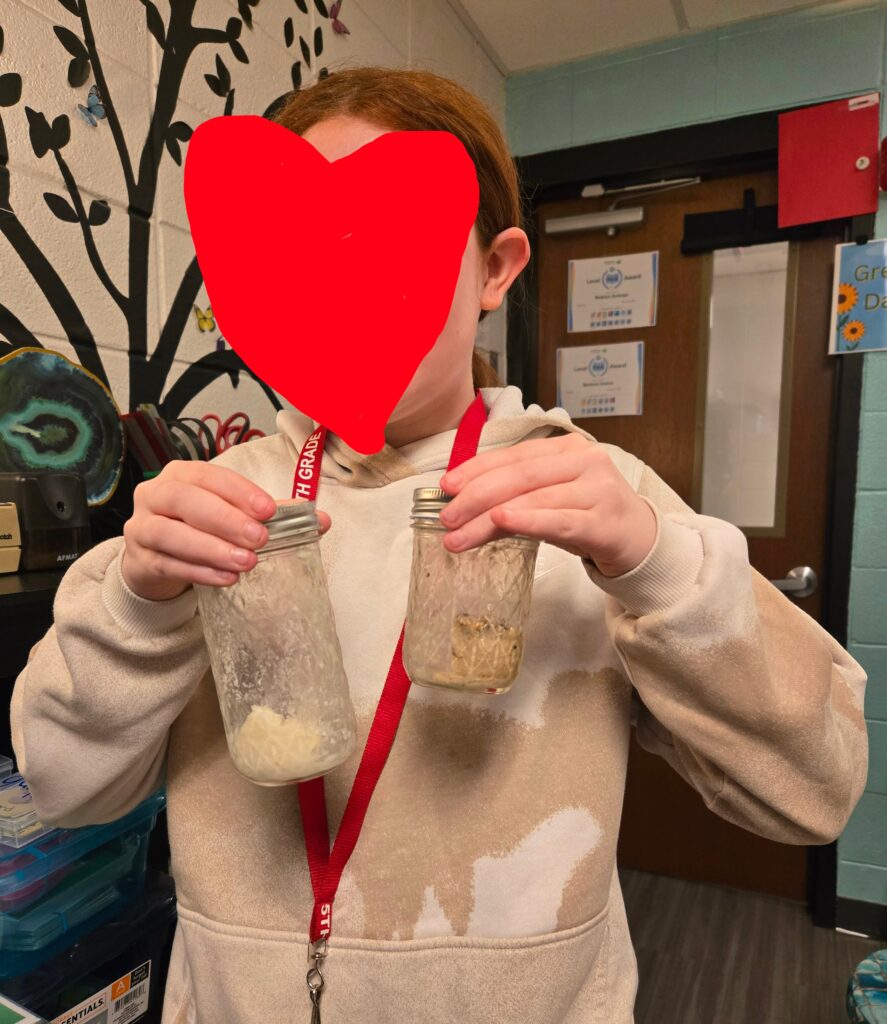
Photo of my student’s positive vs. negative talk to rice- this took place over 30 days and the rice was under the same conditions…the white rice she spoke kindly to, the dirty brown rice she spoke maliciously to. Not kidding.