Last Updated: 6/25/2026
By: Amy Schlueter
Have you ever spent four straight days teaching the exact same skill, only to have your students innocently ask on Day 4, “Wait… we’ve done this before?” Meanwhile, you’re thinking- I can’t believe everyone secretly had their memory banks erased AGAIN last night.
You point to the word cake and ask, “What does Silent E do?”
Somehow everyone becomes very interested in the current state of their cuticles. One brave soul finally says, “Uh…It makes the e say its name?” Not quite, my friend.
Being a reading interventionist sometimes feels like starring in Groundhog Day. Same skill. Different day. Same confused faces.
Why Students Forget So Quickly
Our brains are designed to forget information that doesn’t seem important.
Think about it. Your brain processes roughly 74 gigabytes of information daily and is constantly deciding what information to keep and what to toss. If a skill is used once and never revisited, the brain assumes it isn’t worth storing.
That’s why struggling readers often seem to “lose” skills they appeared to know just days earlier.
The truth is they didn’t fully lose the skill. The neural pathway simply wasn’t strong enough yet. And it gets even crazier. For students with dyslexia, review takes on a whole new meaning. For example, you’ll need to review new concepts 40 to 200 times whereas a neurotypical child will need just 4 to 14 repetitions. So it’s not you. It’s not them being difficult. It’s just what’s required. And learning to read requires that students build thousands of connections between letters, sounds, patterns, and meanings. Those connections strengthen through repeated exposure and repeated retrieval. In other words:
Practice matters.
Review matters even more.
Think about the last password you created. The one you were absolutely certain you’d remember forever. How’s that working out for you?
The Myth of “They Already Learned That”
One of the biggest mistakes educators make is assuming that once a concept has been taught, it has been learned. Teaching is not learning. And exposure is not mastery.
A student may correctly read ten v_e words during a lesson and still need weeks of review before the pattern becomes automatic.
That’s actually completely normal.
Strong readers have accumulated years of practice. They recognize patterns instantly because their brains have encountered those patterns thousands of times. But our struggling readers simply need more opportunities to build those same pathways.
Teachers are especially vulnerable to this trap because we spend all day teaching, and we spend years teaching the same concepts. We hear ourselves explain that concept 27 times during the week. By the end of the lesson, we’re pretty tired of hearing about, talking about and thinking about silent e.
The students, meanwhile, have directly interacted with the newly taught concept for just a few minutes a day.
What the Research Tells Us
Research on memory consistently shows that information is retained better when it is reviewed over time rather than taught once and forgotten. This application is often called spaced practice or distributed practice.
Instead of teaching a skill intensely for one week and moving on, students benefit from revisiting previously taught skills again and again in a spiraling manner.
For reading intervention students, this means:
- Reviewing previously taught phonics patterns
- Revisiting sight words
- Practicing old concepts alongside new ones
- Reading familiar text repeatedly
- Retrieving information from memory rather than simply rereading it
Every successful intervention program includes systematic review because review is how learning becomes permanent.
Why Games Are Secretly Review Machines
Here’s my favorite way to trick students into thinking they’re not working. Picture me announcing, “Today we’re doing another review activity.” Wah wah. Enthusiasm levels resemble those of people sitting in uncomfortable chairs at the DMV.
But if I say, “Today we’re playing a game,” suddenly everyone is alert, engaged, and possibly arguing over who gets to go first. And they go even crazier if it’s a new game.
Same skills. Same review. Completely different reaction.
Why is this so effective? Because phonics games disguise drudgery as fun. Students read words they’ve seen before. They apply skills they’ve already learned. They retrieve information from memory over and over again. And because they’re engaged, they don’t even realize how much practice they’re getting.
Review games allow students to accumulate the repetitions they need without the boredom that often comes with traditional drill work.
Signs Your Students Need More Review
If your students are:
- Reading a pattern accurately one week and forgetting it the next
- Making inconsistent errors
- Reading words correctly in isolation but not in connected text or vice versa
- Needing frequent reminders of previously taught concepts
- Showing slow progress toward automaticity
The answer may not be a brand-new intervention program. And it may not require a 300-page professional development book. It may not even require color-coded spreadsheets- although most of us do love a good spreadsheet. The answer might simply be another lap around the track.
Making Review Simple
Review doesn’t have to take half your lesson. A few minutes each day can make a huge difference.
Give these a try:
- A quick word-reading warm-up (each student draws 5 cards, passes them to the left and then they read them out loud)
- Reviewing previously taught sound cards (picture cues go a long way)
- Reading familiar phrases- speed round
- Read in silly voices (read it like a zombie, like you’re sleepy, like a witch, etc.)
- Partner games, like Bozo buckets- each correctly read word gets a turn to throw the ball into a bucket, the most in the bucket wins
- Timed retrieval activities, like board races
- Repeated reading of connected text- silly sentence strips, rhyming word sentences or onomatopoeia keep it interesting
Small doses of review, repeated consistently, are usually more effective than one long review session every now and then.
Final Thoughts
When students forget something you’ve taught, it doesn’t automatically mean they weren’t listening. It doesn’t mean your lesson failed. And it certainly doesn’t mean they can’t learn it.
Learning to read isn’t like microwaving popcorn. You don’t push a button, wait two minutes, and magically have a finished product.
It’s more like planting a garden. Skills need repeated watering, sunlight, attention, and sometimes a little Miracle-Gro when things seem to be going at the speed of a garden slug. So the next time a student forgets a skill you taught last week, don’t panic.
Don’t throw out your lesson plans.
Don’t assume the child wasn’t listening. And definitely don’t assume they can’t learn it.
Remember: struggling readers don’t need fewer opportunities to review. They need more. Besides, if repetition is good enough for every commercial jingle that’s been stuck in your head since 2002, it’s probably good enough for phonics too.
Before you spend another week spending your time reinventing review activities, give your students a reason to want to practice.
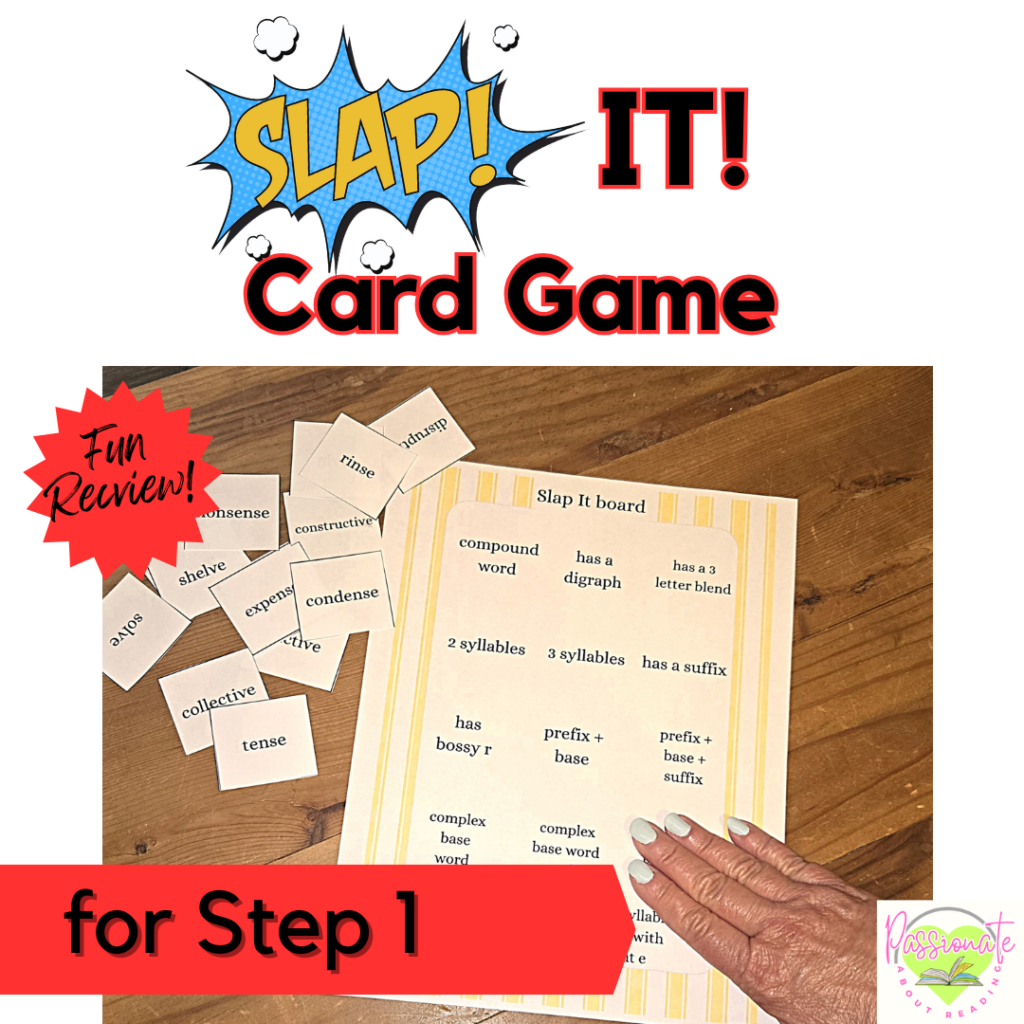
That’s exactly why I created SLAP It! Review has never looked (or sounded!) this fun. With two exciting ways to play, students stay engaged, practice the skills they’ve already learned, and beg for “just one more round.” Best of all, winning isn’t just about being the fastest—it takes strategy, careful thinking, and sometimes a little luck.